
Description
RFID-Based Smart Petrol Pump Automation System | Final Year EEE Project
- Introduction to RFID-Based Smart Petrol Pump Automation System
- How the RFID-Based Petrol Pump System Works
- Components Used in the RFID Fuel Automation System
- Circuit Diagram & Working Process
- Advantages of RFID-Based Fuel Automation
- Applications of RFID in Petrol Pump Automation
- Why Choose RFID for Fuel Management?
- Conclusion
1. Introduction to RFID-Based Smart Petrol Pump Automation System
The RFID-Based Smart Petrol Pump Automation System is an advanced project designed for EEE final-year students looking to explore the world of automation, IoT, and embedded systems. This system enhances fuel management efficiency by integrating RFID technology with Arduino, providing a cashless, secure, and automated fuel dispensing solution.
Traditional petrol pumps require manual operations, leading to delays, errors, and security concerns. However, with RFID-based automation, vehicles can automatically authenticate and pay for fuel, eliminating the need for cash or human intervention.
2. How the RFID-Based Petrol Pump System Works
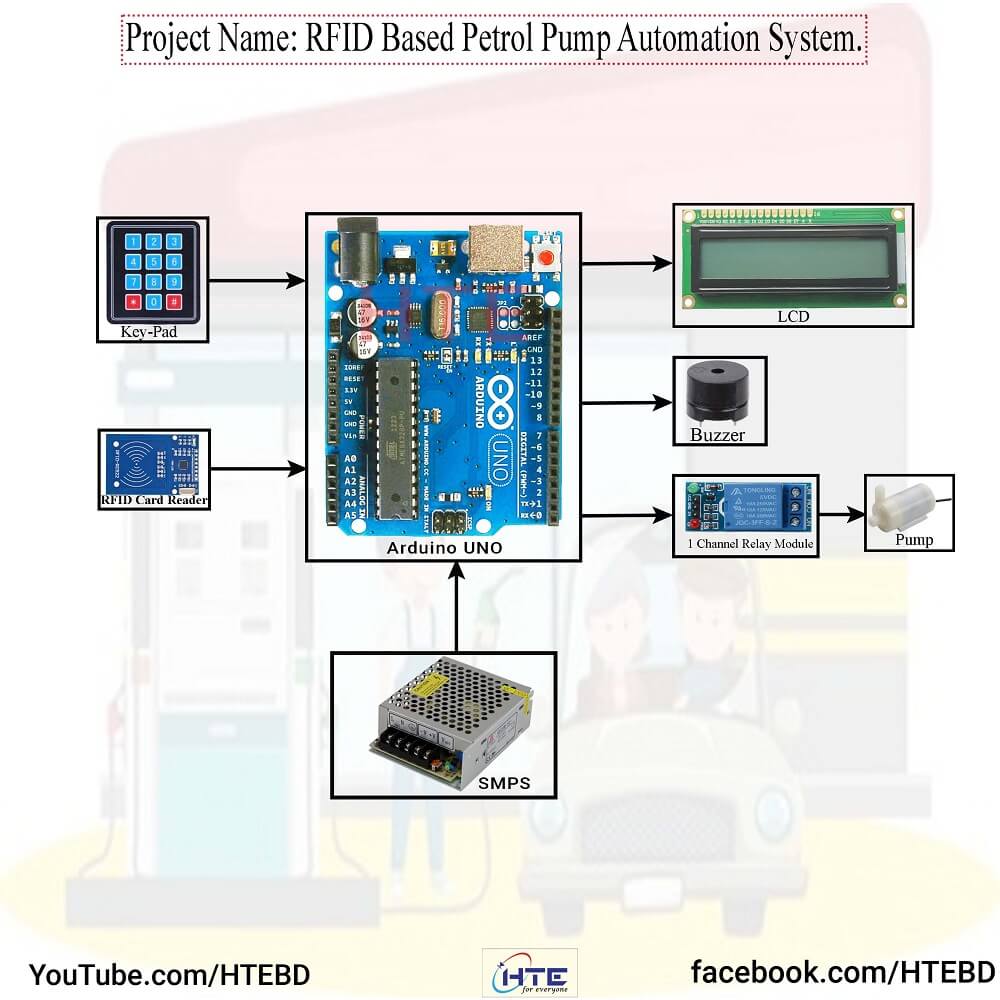
The RFID-based petrol pump automation system functions by using RFID tags and an RFID reader to authenticate vehicles before dispensing fuel. Here’s how it works:
- The vehicle owner receives an RFID tag linked to their fuel account.
- When the vehicle approaches the petrol pump, the RFID reader scans the tag.
- If the authentication is successful, the Arduino-controlled system activates the fuel pump.
- The fuel quantity is set via a keypad, and the amount is deducted from the user’s account.
- The LCD display shows transaction details, and the system automatically stops fuel flow once the entered amount is dispensed.
- A relay module controls the fuel pump, ensuring secure and accurate dispensing.
This contactless and automated approach reduces fraud, improves efficiency, and enhances the customer experience at fuel stations.
3. Components Used in the RFID Fuel Automation System
To build the RFID-Based Smart Petrol Pump Automation System, the following components are required:
Hardware Components:
✔ Arduino UNO – Microcontroller for controlling the system
✔ RFID Reader (RC522) – Reads vehicle authentication data
✔ RFID Tags – Unique ID tags assigned to vehicles
✔ 16×2 LCD Display – Displays fuel amount and system status
✔ Keypad (4×4) – Input system for fuel amount selection
✔ 1-Channel Relay Module – Controls the fuel pump
✔ Buzzer – Alerts for authentication success/failure
✔ Power Supply (SMPS) – Provides stable power to the system
✔ Solenoid Valve – Controls fuel flow
Software & Programming:
✔ Arduino IDE – For coding and uploading firmware
✔ Embedded C Programming – Used to control the system logic
4. Circuit Diagram & Working Process
Here’s a simplified representation of the RFID-Based Smart Petrol Pump Automation System:
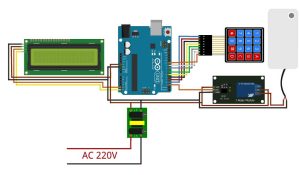
Working Process:
- The RFID reader scans the vehicle’s tag.
- The Arduino processes authentication.
- If verified, the LCD screen prompts the user to enter fuel quantity via the keypad.
- The relay module activates the fuel pump for dispensing.
- Once the required amount is dispensed, the system stops automatically.
- The buzzer sounds to indicate completion.
5. Advantages of RFID-Based Fuel Automation
✅ Automated Payment System: No need for cash transactions.
✅ Prevention of Fuel Theft: Only authenticated vehicles can access fuel.
✅ Fast & Efficient: Reduces waiting time at petrol stations.
✅ Accurate Fuel Dispensing: Eliminates human errors.
✅ Secure Transactions: Prevents unauthorized fuel access.
✅ User Convenience: No need for manual interaction.
6. Applications of RFID in Petrol Pump Automation
🚗 Smart Petrol Stations: Enables self-service fuel dispensing.
🏭 Industrial Fuel Management: RFID-based tracking of fuel consumption in factories.
🛣️ Fleet Management: Automatic fuel allocation for company vehicles.
🚛 Logistics & Transport: Ensures proper fuel usage in commercial trucks.
🏙️ Smart Cities: A step towards cashless and automated fueling solutions.
7. Why Choose RFID for Fuel Management?
🔹 Security & Authentication: Only authorized users can access fuel.
🔹 Time-Saving: Reduces queues at fuel stations.
🔹 Cost-Effective: Minimizes operational costs.
🔹 Contactless Transactions: Safe and hygienic.
🔹 Real-Time Monitoring: Tracks fuel usage with IoT integration.
With the rise of smart automation and IoT, integrating RFID-based fuel automation is a game-changer in the petroleum industry.
8. Conclusion
The RFID-Based Smart Petrol Pump Automation System is a cutting-edge final-year EEE project that integrates RFID technology, automation, and IoT. This system enhances fuel security, reduces manual intervention, and improves efficiency at petrol stations.
Whether for academic research, industrial applications, or real-world deployment, this project provides a practical solution for modern fuel management.
🚀 Get started with your RFID-based automation project today!
📌 Follow us on Facebook for more updates: HTE BD Facebook
🌍 Visit our website: HTE BD
Internal Links:
External Links:
Reviews
There are no reviews yet.