

Description
IoT Based COPD Patients Monitoring System
Introduction to IoT-Based COPD Monitoring
Chronic Obstructive Pulmonary Disease (COPD) is a progressive lung disease that affects millions worldwide. Managing COPD effectively is crucial for improving the quality of life and reducing severe health complications for patients. With the advancement of technology, IoT-based patient monitoring systems have emerged as a powerful tool to support continuous health monitoring. This project focuses on an IoT-Based COPD Patients Monitoring System designed to provide real-time data to both patients and healthcare providers, ensuring timely interventions and enhanced care.
Components of the IoT-Based COPD Monitoring System
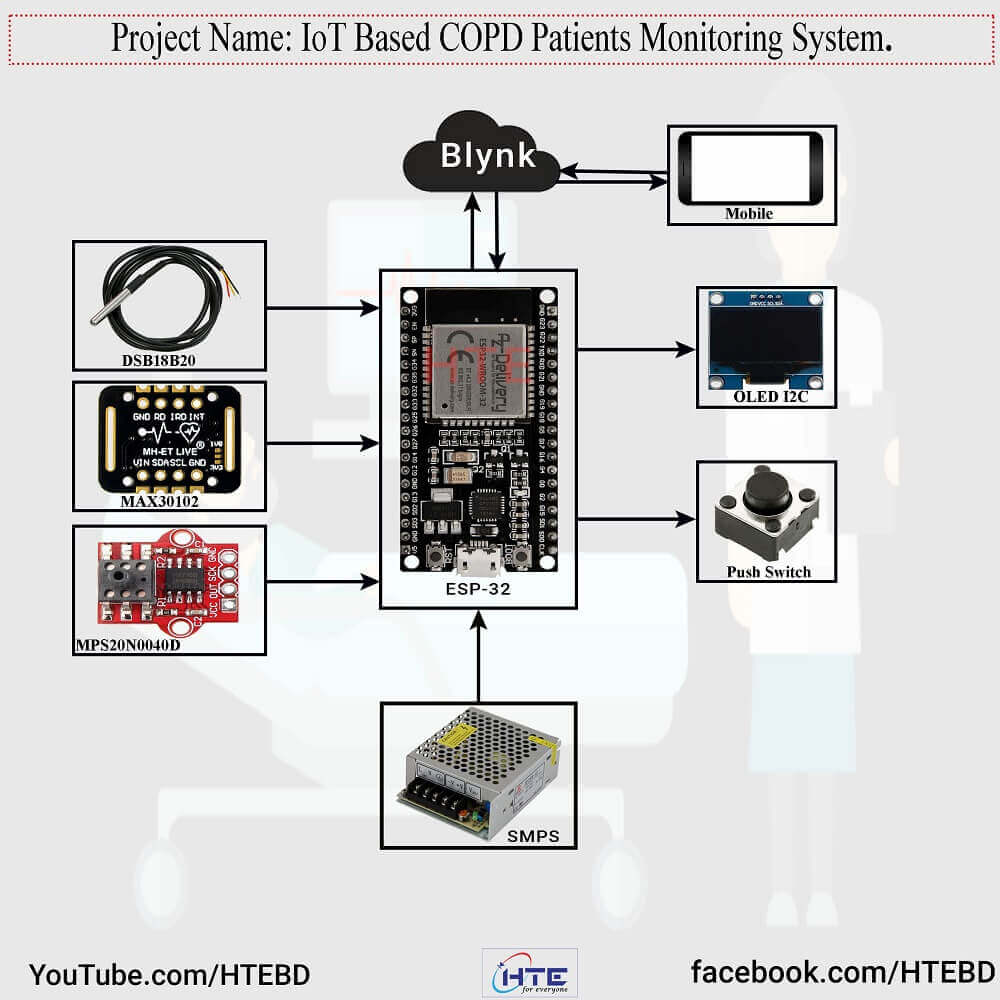
The IoT-Based COPD Patients Monitoring System integrates various sensors and components that work together seamlessly to gather, process, and transmit patient data. Below are the main components used in this project:
- ESP-32: A robust microcontroller that acts as the central processing unit, connecting various sensors and modules for data collection and communication.
- Blynk Platform: A cloud-based application used for real-time data monitoring via mobile devices. This platform provides seamless integration and a user-friendly interface for tracking health metrics.
- DS18B20 Temperature Sensor: A digital sensor used for accurately monitoring the body temperature of the patient.
- MAX30102 Pulse Oximeter and Heart Rate Sensor: This module measures the patient’s heart rate and blood oxygen levels (SpO2), crucial for detecting early signs of respiratory distress.
- MPS20N0040D Pressure Sensor: Used for monitoring changes in lung pressure, providing essential data for evaluating the patient’s respiratory function.
- OLED I2C Display: Displays real-time sensor data for easy local monitoring.
- Push Switch: Allows manual control and interaction for the patient or caregiver.
- SMPS (Switched-Mode Power Supply): Supplies the necessary voltage and current for powering the system.
How the System Works
The IoT-Based COPD Patients Monitoring System operates by collecting data through various sensors connected to the ESP-32 microcontroller. The sensors monitor key health parameters including body temperature, heart rate, SpO2 levels, and lung pressure. This data is processed by the ESP-32 and displayed locally on the OLED screen while also being transmitted to the cloud via the Blynk platform.
Patients and healthcare providers can access this data in real-time through a mobile device, enabling them to stay updated on the patient’s health status. If any of the monitored metrics deviate from normal ranges, alerts can be sent to prompt immediate action, potentially preventing complications.
Key Features of the System
- Real-time Monitoring: The system provides continuous monitoring of critical health parameters.
- Remote Accessibility: Through the integration with the Blynk platform, health data can be accessed from anywhere, allowing for remote patient care.
- User-Friendly Display: The OLED I2C screen offers an at-a-glance view of the monitored data for quick reference.
- Custom Alerts: Configurable alerts ensure that any abnormal readings trigger notifications for timely intervention.
Building the IoT-Based COPD Monitoring System
Step-by-Step Guide
- Setting Up the ESP-32: Connect the ESP-32 to your computer and upload the required firmware and code that facilitates sensor data collection and communication with the Blynk platform.
- Connecting the Sensors:
- Attach the DS18B20 to the ESP-32 for temperature readings.
- Connect the MAX30102 to measure pulse rate and SpO2 levels.
- Wire the MPS20N0040D pressure sensor for lung pressure monitoring.
- Configuring the OLED Display: Link the OLED display to the ESP-32 via I2C communication for real-time data visualization.
- Integrating the Push Switch: Connect the push switch to allow manual interaction.
- Powering the System: Connect the SMPS to provide a stable power supply to the ESP-32 and sensors.
Programming the System
To program the system, use the Arduino IDE or any compatible coding environment to write and upload the code for interfacing the sensors, managing data display, and transmitting data to the Blynk platform. Ensure the Blynk library is included and configured with the necessary credentials for cloud connectivity.
Benefits of IoT-Based COPD Monitoring
Implementing an IoT-Based COPD Patients Monitoring System offers multiple advantages, including:
- Enhanced Patient Safety: Continuous monitoring helps in the early detection of potential health deteriorations, allowing for timely medical attention.
- Improved Quality of Care: Remote monitoring reduces the need for frequent hospital visits, making it easier for patients to stay under observation while at home.
- Data-Driven Decisions: The collected data can be analyzed over time to observe trends, helping healthcare providers make informed treatment decisions.
Challenges and Future Enhancements
While this project provides a comprehensive solution for monitoring COPD patients, it also comes with challenges such as ensuring data privacy, maintaining network reliability, and power management for uninterrupted service. Future improvements could include integrating AI algorithms to predict potential health events and further optimize patient care.
Conclusion
The IoT-Based COPD Patients Monitoring System is an innovative solution that leverages technology to improve the management of COPD. By offering continuous monitoring, real-time data access, and automated alerts, this system enhances patient care and supports proactive healthcare management. As IoT technology continues to advance, such systems will play an increasingly vital role in healthcare, contributing to better patient outcomes and more efficient resource utilization.

Reviews
There are no reviews yet.